
Jan 21, 2026
●
Insights

Family wealth dynamics are often shaped slowly, through stories of origin, moments of tension, and unspoken values that influence how families relate to money, power, and one another.
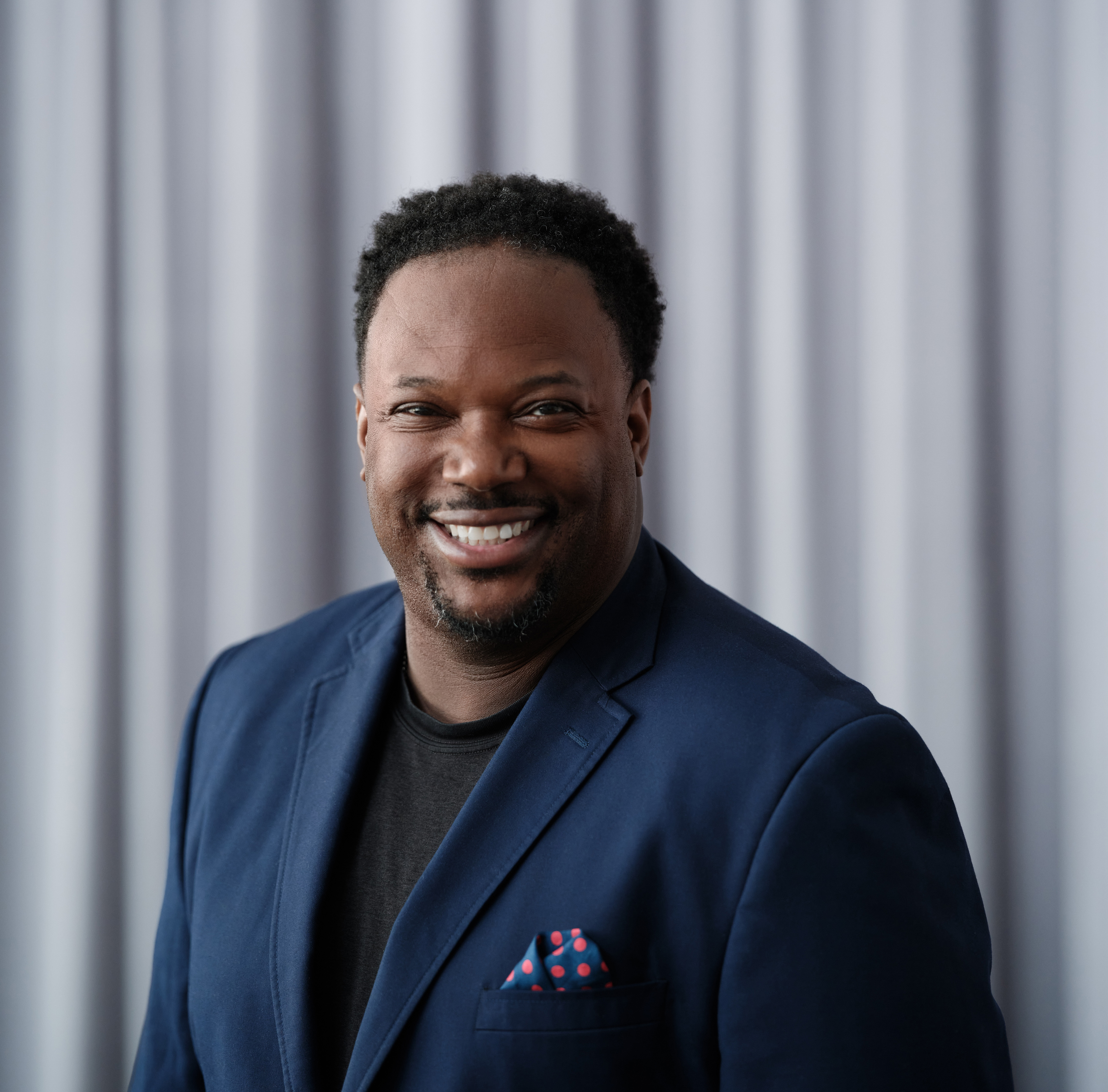
This interview brings together Crystal Shaw, Operations Manager and Dr. George James, a family wealth psychologist whose work is deeply attuned to mental health, family systems, and generational wealth.
In this conversation, Dr. George reflects on education, cultural inheritance, family dynamics, and the emotional undercurrents that shape philanthropic and business decisions.
Drawing from his clinical background and his book, I Give Myself Permission*, he offers insights into how families can move, brick by brick, toward greater clarity, connection, and shared purpose.
What follows is a lightly edited transcript of that conversation.
%20(1800%20x%201800%20px)%20(1500%20x%20750%20px)%20(1920%20x%20300%20px).png)
Crystal: I want to start by noting that education seems to be really important to you. Looking at your background, you've pursued multiple advanced degrees, most recently completing an executive MBA last year. I'm curious—was education something that was heavily encouraged when you were growing up, or is this a passion you developed along the way?
Dr. George: It's really interesting—I think people could totally see that in looking at my life, and there are a couple of things. But what sticks out to me was a conversation that came up just a few months ago.
We were celebrating someone who was getting his undergraduate degree, and he started talking to my wife and I about what we've done. He was like, “Wait, are y’all competing around degrees?” And yeah, I got another degree, then my wife needs to get another degree, right? We’ll see how long that lasts.”
The real backstory is that neither of my parents had formal degrees. They didn’t even have a high school diploma. My mom attempted to get her GED and missed by a few points. She really wanted to go back, and never had a chance. My father got close to a middle school education, but also could not read. They were both from Jamaica. They had to work really hard, with limited education.
A lot of folks from other countries, particularly the Caribbean, when they come to the U.S., put a value on education. I think that was just ingrained in me. They never said, “You need to get a whole bunch of degrees.” They never said, “You need to go and be this.” But the message that getting an education could help me and help my life and career—that message was there. I just took that message times ten and went a couple of degrees past what they thought.
Initially, I wanted to be a medical doctor, so I would say I was going to go to medical school all the way into college. That was part of my plan. So the thought of going beyond college was probably already there for me. When I switched from biology to psychology, I think it was still there that I was going to get a doctoral degree. So at least three of those degrees were already there in my mind.
So yes, there was a family value around education and how that could lead to success. There were just opportunities that presented themselves, and I found my way in places around formal education that seemed to fit me and the way I learned.
Crystal: Okay. And you talked about your parents. Did you grow up in Jamaica, or just your parents grew up there?
Dr. George: I was born in the U.S., but my experience growing up was also a Jamaican experience—Jamaican food, the church we went to was mostly Jamaican folks. Even now, I still catch myself where certain words I say are still fully immersed in Caribbean and Jamaican culture.
I would go back and forth for many years, every other year or so. I lived in Jamaica for two years during kindergarten and first grade. So, I can still talk Patois and talk about Jamaica anytime you need. All those things are still a part of me, and that cultural experience has influenced the way I see the world.
Crystal: I saw that just a couple of months ago, you were visiting Jamaica with your family, and you went to the house that your father built. You were talking a little bit about the sacrifices that your parents had to make and what it meant to you to go to that house and know that your father built it himself. I am wondering how your family background, seeing that home, and taking your family back to see it shaped your understanding of family dynamics and wealth.
Dr. George: Yeah, that was such a great experience to be able to bring my children—in particular at the ages where they are now, 14 and 12—to see rural Jamaica, where my parents lived, and the house that my father built. My dad would tell stories about this person, who was basically like a father figure to him, who took him in and let him live with him.
He gave him a piece of land. When my father earned money, he would get some cement, and brick by brick, build one room after another. If we say my father is the first generation, and I'm the second generation, and now my children are the third generation, they are now able to see the world and travel and do things in a way that my parents could not.
And I don't take that lightly. I think that the level of sacrifice, care, compassion, faith—all the things that my parents did, which were shaped by their upbringing—has influenced mine and the way that I parent my children and the way they see the world.
When I look at my father's entrepreneurship and what he did—the challenges and struggles he had in entrepreneurship—it influenced my level of entrepreneurship, which has influenced how I teach my children about entrepreneurship. I look at what my parents have done. I look at my mother and her hard work, her consistency to work at a hospital for 33 years, showing up daily and doing overtime. All those things I internalized and use to influence my thoughts daily and what I do, and also to influence my children. And that legacy will continue to influence future generations going forward.
Crystal: You laid it out really well, from your parents to now your kids, the influences being passed down. In your experience working with families, how do you see those kinds of cultural, personal, and educational backgrounds influence how families approach their dynamics and their discussions about money and wealth?
Dr. George: Yeah. In my family, as an example, growing up, my parents would talk about not having money and some of their challenges, and they would feel that if they had more education, that would've made a difference.
My mom, who didn’t have a GED at that time, could have become a nurse. She became a nurse's aide, a patient care associate, and there's a big pay difference between those things. At that time, just a few more points on the GED would have qualified her to be a nurse. She had all the other attributes to become a nurse: how she cared, how she thought about people, but because she didn’t have those few points, she wasn't able to do it. So that also impacted our income in the family.
My father, not being able to read, also became insecure about whether he could move up in a company. There were people he worked for who loved him and cared for him and believed in him, and his work ethic and loyalty were meaningful for them. And that could also have shifted our income in the family.
So it was ingrained—the importance of education, hard work, showing up, and loyalty. These are some of the family dynamics that I learned that became pillars and values that are part of our mission and vision in our family that we now share with our children.
When I look at the families I work with, some of these messages are implicit. How do they communicate about money? Sometimes families are not talking to their children—even adult children—about the wealth that they have because they might be concerned it could impact them. But what happens if one day you learn that you are from a wealthy family? You might see the signs, but when you learn how much it is, that can actually be traumatizing and impactful.
So sometimes I’m helping families to not just have implicit messages that they pass down from one generation to the next, but to be explicit. To be very clear in their communication so that it doesn’t create some of the family dynamics, or even the tension sometimes, that can be between family members—how does that impact decisions they have to make that could affect their philanthropy, wealth, or business? And if they’re not really paying attention to those family dynamics, it could really destroy them.
Once again, in my family, I learned how these dynamics were passed down, and now I’ve been able to be more explicit with my children as a result. And I see that sometimes in the early generations—the Gen ones, the Gen twos—they’re sometimes the ones making the wealth or the ones having to maintain the wealth, but the next generation needs to understand some of those messages to figure out how they want to move forward. And a lot of times, I get to help families translate those messages that haven’t been spoken but need to be.
Crystal: What are some of the benefits that you see in translating those messages to be more explicit?
Dr. George: I think for lots of families, it's things that they feel, but it’s not necessarily talked about. So, for instance, does the family have an education policy? Is it important for family members to have a certain level of education to move up in the family business or family philanthropy?
Do there need to be conversations around prenuptial agreements? Do we have that? For lots of people, it brings up thoughts around trust, or “Are you saying I’m gonna get divorced?” A divorce without a prenup in certain families could actually destroy the wealth or have a significant impact. But how are we talking about that in a thoughtful, sensitive way? Sometimes people are just saying, “You have to do this, and there’s no way around it,” and not really helping them to communicate that.
So I think there are things that people feel and see in these families, but it’s just not talked about. I get a chance to listen to each family member and hear what is happening within the family, and then start to talk about, “Here are some things that I think are potential areas that we should start discussing.” And because I’ve spent time with families, I’ve built a level of trust, and then we come up with a plan and a strategy to really talk through some of these things that then helps them to make larger family decisions that impact the bottom line, their philanthropy, their business, as well as their connection with each other.
Crystal: Yeah. Yeah. So it sounds like you’re really helping them bridge that gap. What are some common barriers that you see that have prevented them from having these conversations before?
Dr. George: Yeah, I think what’s interesting—whether you are wealthy or below the poverty line—talking about money can be really difficult, and people have all these different emotions and feelings about money. I’ve worked with folks who can barely make ends meet and feel embarrassment and shame about where they are with their finances, and I’ve worked with millionaires and billionaires who also can feel embarrassment about how much money they have.
Regardless of where people are, we can have these deep emotions around money, and one of those things that I see is that people just don’t say that. They don’t talk about, “I’m feeling shame that I have so much money that I might not be able to relate to someone else,” or they could look at me differently, which is very similar to someone who feels, “I don’t have enough money and I can’t relate.” And I think people could look at me differently, but we don’t often think that someone who doesn't have enough money in their bank account and someone who has a lot of money in their bank account can actually feel very similar things.
My job is to see that, translate it, and help them discuss it. Some of the things I see commonly are people—wealthy families who are working in their philanthropy or family-owned business—avoiding some of these conversations. It’s emotional, it’s deep, it’s triggering. It brings up a lot of stuff. Or they feel like, “If I say this, I don’t know if my other family members are thinking and feeling the same thing.” Once they actually do start to have these conversations, they realize they’re not the only ones.
Avoidance is something I see often, sometimes along with feelings of inequity. Even in a wealthy family, “You have more money than I do, right? Or how do I have access? Or did I get access to my trust, versus do you have access to your trust?” There are these things that come up because they’re not discussed. We create our own stories and narratives and rumors, and then that impacts how I show up in a decision-making meeting with someone—now I think maybe, “Has more money than I have, or got access to their money in a way that wasn’t the same way”—these things can create issues.
I really help people to have clarity and to be able to talk through some of those things. And also sometimes, even outside of money, people want to feel like they have a level of influence. How do I get to the place in the family where I can help the family or make decisions? Is it okay if I don’t want to be in the family business or family philanthropy? How do we talk about that? So these differences are sometimes dealt with harshly or dealt with in silence, and then it erupts into this issue that, if they had real conversations—or even someone like myself—they might not have had to go down that path.
Crystal: Yeah. Let’s say you are working with a family that has had some of these conversations that didn’t go well. What are some common regrets that you hear from them?
Dr. George: I think once again, like anyone—so just to give it context, my background has been in mental health, being a therapist, and I did a lot of work—and have done a lot of work—with couples, so I’m used to having multiple people share their thoughts and opinions, couples and families. Co-parenting, all those, right? So I’m used to hearing different perspectives and hearing people try to say what they want or what’s going on, and then react to what someone else has said.
And in these wealthy families, family foundations, some of the things that go off or don’t go the right way are either:Somebody gets triggered and now uses anger, frustration, their position, their power, their influence, their money to try to control the narrative or the decision. Or somebody then decides, because of a reaction to something, that they will shut down, remove themselves, or disengage in some way. It’s usually someone doing something that is really intense, overwhelming, maybe even intrusive or aggressive—or someone pulling away and shutting down.
And both of those reactions can be harmful, right? Sometimes that’s where there’s the end of a relationship. Sometimes that’s where you see a family member hasn’t been connected in whatever’s happening for years. Or that’s where you see someone whose aggression is so intense that people don’t want to be around that person. And when they look back, they realize they burned bridges, they hurt the family process, they didn’t follow the rules or the protocols—or they realize they didn’t have rules and protocols to help establish them in this level of communication.
And oftentimes, I’m either helping them recognize how to build some of that or recognize where they went off track, and also helping them on multiple levels: individual, subgroup, large family.
Crystal: What happens when these families that are obviously made of all different types of individuals, they have differing values, differing priorities, and how they want to give, and what does that kind of look like?
Dr. George: Yeah, I think that is pretty common—that people have different values or things that are important to them, and also life experiences. Life experiences will sometimes shift or influence what matters to people. And I think that’s fine. I think the challenge is having a place where people can communicate about it.
So once again, sometimes an older generation might have more influence and power and access to wealth compared to those in younger generations. Do they make space and room for younger generations? Do they ask the others around the family what they think and want, or do younger generations ask the opinion of those who might be older to think through where they might be and come up with a plan?
A lot of it is how much collaboration there is in the family and what systems are in place for that level of collaboration. Being able to think about whether all the resources have to go to one place or one special focus area? Sometimes it could be, “Well, as a family, this is what we care about and we’re gonna put a majority of our funds there, but because we learned that in the next generation or two they also care about this, we can start to create space for that.”
But that’s a conversation, or a series of conversations. Just like folks I’ve worked with throughout my career, it’s never just one conversation and it’s done. You have to be willing to be invested in a series of conversations to understand people’s positions, to come up with some really clear strategy, to figure out what can be done, and then be able to move forward on that.
And I think when people are able to do that and be patient with themselves, the process, and the family, they can find a good, if not great, solution.
Crystal: Are there any strategies that you have found effective when they do need to do that, when they’re new to this collaboration and they are not sure where to start? Are there any go-to strategies that you have found effective?
Dr. George: Yeah, sometimes some of these families already have a process in place, right? They might have a family office, or they might have family meetings where they’re already discussing things. I think being able to have time carved out in those spaces to discuss some of these other things—like I’ve been fortunate to work with families who are taking on some of these big topics, like their thoughts about money or silence or accountability. There are big topics, but now when you get family members talking about it, you can start to understand, “Oh, that’s why they were coming from that perspective,” or “That’s why they were saying it in that particular way,” and that can help people to be a little bit more thoughtful and understanding.
What I’ve been able to do as a consultant to these families is to build up a level of trust where they are open to having these conversations that they probably normally wouldn’t, and that ends up being part of the strategy. If they just do it on their own, it probably might not go so well.
But having someone who is trained and skilled to facilitate, to organize, to help them come up with strategy, to also empower and equip them—I think then they have a higher level of success, and then they feel like, “Oh, it is possible for us to talk about some challenging things.” I will also say there are probably some things that might not really get to a clear consensus or a place where, “Okay, we’ve solved this,” but what I’ve seen is that there are some—most things we can solve or figure out, and then there might be some really big issues that might take a much longer time to get to, or we might just have to figure out multiple solutions to deal with that bigger issue.
But if people are willing to do the work, I’ve seen them have a better connection as family members and be able to make better decisions as business partners or as philanthropists in the work that they do.
Crystal: It sounds like having the time set aside for these conversations and also having someone there that can help facilitate those conversations, that has the knowledge and those skills—like yourself—to really facilitate those conversations, to understand where we might find consensus in this area, where we might not, and maybe we should start here to help them move through those conversations… and something that really supports families in being able to have these discussions in a way that will support their relationships. Have you seen that as you’ve worked with families? Do you find that this work helps to strengthen the relationships that they have with each other, even outside of the conversations about money and wealth?
Dr. George: I definitely believe that. And I think what happens for people is that you don’t realize—what you’re really saying is, you’re having multigenerational family members in business and philanthropy together. And when you’re at work, if you don’t like a coworker, you can maybe avoid them or just show up to the meeting and that’s it. But what happens when you now have to see that family member, that coworker, at a family function? Or vice versa—someone that you work with is now also in other places where you have to show up.
When people are able to work through some of these challenges, those other places don’t feel as awkward, or it doesn’t feel as overwhelming where people are sometimes avoiding people. There’s so much time that you can avoid without it being noticeable, especially when we’re talking about a multi-generational family.
So I think this helps people to lower their avoidance, be more connected, and also learn more about each other, which allows them to see each other—even if we disagree or see life differently—that, “Oh, I could see you as a parent,” or “I could see you as someone who really thinks about being impactful.” That shared experience and way of seeing each other can help.
And going back to the previous point you mentioned, I think for lots of families and lots of businesses, people talk about the lowest-hanging fruit, right? What do you need to do first to get the business going or to get some momentum or to build capital? Oftentimes the work is thinking about, what is the lowest-hanging fruit that will give the family some momentum, a feeling like, “Oh, we were able to work through this, we were able to talk about this, and build some confidence.” That leads to the bigger thing. Sometimes the bigger thing is taking center stage, but we might need to work on some other things to now get to that—that thing that’s really taking up a lot of time and energy.
Crystal: Okay, I want to switch to your book that’s releasing soon, titled I Give Myself Permission: Take Risks. Be Imperfect. Live Boldly.*, which I’m sure is a bit of a switch, but also like it is what we’ve been talking about. Why was writing a book—and this book—something that was important to you?
Dr. George: As I started my career, I felt like I wanted to be of impact, and to do that not just in one-on-one situations or in the office, but more broadly in other places. And that gravitated me to doing more public things—from speaking engagements to TV interviews to writing. And I always thought that I wanted to write a book that could really impact others.
I Give Myself Permission started as a keynote that I began to do in 2021, where I was invited to a self-care retreat for a group of veterans, and I shared it with them. It was just really impactful. And since then, I’ve been sharing it with people, organizations, companies, retreats, nonprofits, for-profits across the country.
And then I turned this talk into a book proposal. I had to go through my journey—my ups and downs, the “nos” here and there—but like they say, you only need one “yes.” And then I was able to get a book contract, and I was really grateful for the opportunity to share this part of my life’s work.
And it really is around what are the limitations, boundaries, and barriers that we put on ourselves, and helping people to realize that those barriers and limitations come from other spaces—they’re influenced by other things. And what I mean by that: I share four barriers that we experience. I talk about social stress, I talk about leadership stress, I talk about the stress of injustice, and family-of-origin stress. All these four areas really impact us in such a way that we then start to say no to ourselves. We don’t even let the idea come out.
And before we know it, we’re saying, “No, we can’t do it. Not now. I don’t have enough money, or I have too many things to take care of, or I can’t.” Whatever the thing is—playing with your child or grandchild, reading a book, starting a business, working with a family member to really revise what the family does.
And it is related because I am often trying to help families and multigenerational foundations and family-owned businesses give themselves permission to do things differently. It doesn’t have to just be, “Do as I say,” or, “This is how it’s always been done.” We can communicate, and we can listen to the next generation, or we can hear from the previous generation and figure these things out. If you give yourself permission to do it a little differently, I get to help people along that journey.
In my keynote—and thankfully in my book, which will be coming out in January 2026—I’m really excited about this opportunity to share my work in this way. It’s just been powerful seeing how people have resonated with the talk, and I am hopeful and excited that people who get a deeper dive and understanding in the book will also be able to resonate with it.
Crystal: You spoke about these four barriers that you discuss in the book. When you’re working with families and you come across one of these four barriers and support them through working through that, do you find that some of the people who were more shut off in the beginning start speaking up? Do you see those kinds of shifts in people as you address these barriers?
Dr. George: I definitely have seen shifts in people as these barriers are addressed and having more communication. I can think of families where they just have not had an advocate for that side of the family, and it made them feel negative things and feel not heard in the family.
As I was working with them and starting to notice that fact, I started to highlight this and speak to them about it—they haven’t felt heard and seen. Some of these barriers really result in people not feeling seen, and the narrative and story that then gets created is like, “I’m not important,” or “What I have to offer, my age, my generation, or the things I want to talk about don’t matter.”
We can create these stories in our families that say it’s not important, or we then say, “I will make it important,” and we start to do it in ways that might not be the best or the healthiest. When I’m able to enter a family, build this trust, facilitate, and help look at what’s happening, the fact that I start to talk about some things that were always there—but now are being talked about on the main stage with the family—people start to feel thought of and heard. They start to speak up.
And when they notice that, and then someone else notices, “Oh wow, that issue’s now being talked about. What about my issue?”—that starts to be almost a continuation of the work of realizing, “Oh, maybe these concerns, hopes, desires, or ideas might have a place in the family,” and that could really help the family to operate better.
My thing in helping families to give themselves permission, is really about recognizing that if we can work through this now before it becomes catastrophic—before it becomes a fire—you have a better chance of success. Then they can really live out the hope and dream that they have: we want to be of impact, we want to benefit other people, we want to still have a good time as a family, we want our business to be successful, we want our foundation to be successful, and we want to enjoy each other’s space. That is part of giving themselves permission—that all those things can happen.
Crystal: What is one piece of advice from your book? You’ve given us a lot already, but what’s one piece of advice from your book that you’d give to family members trying to navigate these conversations?
Dr. George: From my book, I really try to highlight the stories that we create in these various categories. In the book, I list out ways people can give themselves permission: to take risks, to not be perfect, to love and be loved, to let go and move on, to heal, to forgive, to play, and to rest.
So there are all these themes around giving yourself permission that I talk about in the book. But the through line to that is recognizing that we have been creating a narrative that has allowed us to be stuck in a particular area—or areas—without giving ourselves permission.
In a lot of families, someone might say, “I’m too young.” That’s a narrative around youth, or, “I’ve worked in this family foundation for my entire life, and to give up my position, who will I be? My identity is wrapped in that story,” so they can’t give themselves—or anyone else in the family—permission to move on because they have to navigate some really difficult things.
So I think really paying attention to the narratives that we develop and create, and how that influences our decisions—or, in particular, for the book, the lack of giving ourselves permission because of those narratives—is key.
In these families, foundations, and philanthropic settings, a lot of it is giving yourself permission to allow the family to grow, giving yourself permission to maybe not be in senior leadership, giving yourself permission to rethink where the family focuses their giving, giving yourself permission to hire a consultant to help navigate some of the things you are working through and not have to do it on your own.
So I think it’s paying attention to narrative, and then finding a way to give yourself permission through that. In the book, I try to help people look at it in lots of ways.
Crystal: I’m so excited to get a hold of your book when it comes out in January. What are you giving yourself permission to do today? This is our final question.
Dr. George: No, I appreciate that. I just had to travel back and forth. I’m in Philadelphia. I traveled to LA and back to support my daughter, who just recently went on an exchange program to Australia. And to me, it was giving myself permission to be the father who can just say, “Look, I’ll not work so I can be there with you,” and see her on the plane and let her go on that journey.
But now, coming home, I’m tired, so I’m giving myself permission to just relax and miss my daughter, and be able to get back into my work group, but also take some time. That’s part of what I’ve been doing since I got back. I ramped up a little bit today, but I’m also going to take some time to chill.
So that’s what I want to give myself permission to: be happy for my daughter and where she is, be grateful that I was able to go and support her, and be able to rest and recharge as I’m now back.
Crystal: Great. Wonderful. We did it.
Dr. George: Yay.